

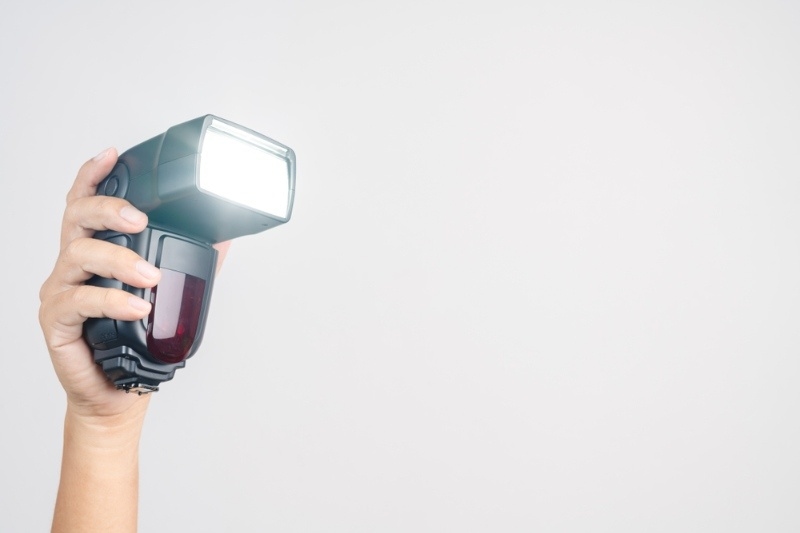
Using an external flash greatly enhances a photographer's ability to produce high-quality photographs and showcase creativity. An external flash gives photographers more options and control over their light, allowing them to adjust intensity, direction, and placement, making flash photography more exciting and professional. So there is always excellent lighting & balance with a flash, and outstanding images can be achieved in any environment, whether you are new to flash photography, using different lighting styles, or learning new techniques & tips to improve your speedlight photography skills.
An external flash is a powerful lighting source that lets you control lighting beyond what a camera’s built-in flash can provide. If you are learning about flash photography, experimenting with flash lighting, or trying to improve your skills as a speedlight photographer, an external flash will give you the flexibility to create images with creative control.
Compared to built-in flashes, an external flash lets you angle, diffuse, and use other lighting techniques in more ways. With this flexibility, you can create images without harsh shadows while producing professionally balanced images in almost all settings.
The quality of light from an external flash will generally be softer and more natural than that from a built-in flash. You can reduce red-eye and avoid harsh highlights by adjusting the angle or intensity of the external flash. This is especially important when working with flash photography (in particular, using flash indoors for portraits or when it's dark outside).
Built-in flashes typically do not produce as much light as an external unit. An external flash also allows the photographer to adjust his or her output, bounce light off a ceiling or a wall, and set up multiple flashes in more complex configurations, providing thousands of ways to manipulate his/her lighting.
When shooting in low light or indoor settings, or if you would like to control shadows. When shooting an event, portraits, or creative photography, a flash is needed to create visually stimulating effects.
To use an external flash properly, you'll need to understand several concepts, such as power, positioning, and technique. When your external flash is used correctly, it will provide a completely new perspective for your photographs.
The key to success with your first Speedlight is to start with the most essential tips and tricks, such as how to manually set the flash power or use TTL (through-the-lens) mode. Once you develop a basic understanding of how to use the Speedlight, you'll learn how to dial in the ambient light or flash output for consistent results.
You need to be aware that using a direct flash will result in harsh shadows on your subject. Using bouncing techniques with an external flash rather than direct flash creates soft, uniform lighting that enhances skin tones and reduces glare, making it an ideal technique for portrait photography.
When making a basic flash setup, you will need an external flash, diffuser, and reflector. Position your flash tilted at approximately 45 degrees to create a more natural-looking lighting effect. Try different flash set-ups to learn how light interacts with your subject.
One to avoid is overexposing your subject. You can reduce the power of your flash, maintain the proper distance from your subject, and adjust your ISO settings accordingly to avoid overexposing your subject. You can ensure your flash photography will look professional and well-balanced by implementing the above speedlight tips.
Once you have mastered the fundamentals of basic photography, you can use advanced techniques to improve the quality of your photography considerably.
Off-camera flash lets you place the light farther from the camera, creating depth and dimension. This is a very common way that professional photographers use external flashes to create dramatic lighting in their photographs.
Multiple off-camera flashes will allow you to create layers of light on your subject and create a nice overall balance between the flash lights for different areas of the photo.
The benefit of high-speed sync is that it allows your external flash to work at higher shutter speeds than regular flashes. This becomes incredibly useful when photographing outdoors, especially for balancing overpowering sunlight and achieving proper exposure.
Modifiers such as softboxes, umbrellas, and diffusers provide superior performance with external flash lighting, softening and spreading the flash light evenly. These three tools are critical to producing studio-quality results with your external flashes.
Using an external flash lets you completely alter and improve the quality of your photography. When you learn how to effectively use flash (speedlights), follow some good speedlight techniques, and try experimenting with both off-camera and on-camera flash, you will have access to some amazing lighting possibilities that can be used to create professional-looking images in all different types of lighting.
An external flash helps improve low-light photography by adding controlled light for better visibility of your subject, reducing image noise by keeping your ISO low, allowing you to shoot faster because you will have light on your subjects regardless of their surroundings, and consistently achieving balanced flash lighting in difficult environments.
Beginner photographers can start using off-camera flash techniques by acquiring easy-to-use wireless triggers, learning about light direction and positioning, and experimenting with various flash setups; this will help them gain confidence and increased control over the creative use of lighting in many different shooting situations.
Professional photographers use the following accessories: a diffuser, a softbox, a reflector, a gel, and a wireless trigger. These accessories enhance the performance of external flashes by providing greater control over flash exposure, adjusting the flash light's color, and creating unique visual effects, resulting in higher-quality images when working with an external flash in any application of flash photography.
Speedlight tips help create consistent lighting results by guiding photographers in adjusting flash power, using TTL modes, controlling light direction, and balancing ambient light properly, enabling them to achieve predictable, professional-looking results in both indoor and outdoor flash photography.
A proper flash setup provides flattering light, minimizes harsh shadows, enhances facial features, and creates depth in a portrait, creating a more natural and pleasing appearance and allowing control of mood and atmosphere with external flash techniques.
This content was created by AI