

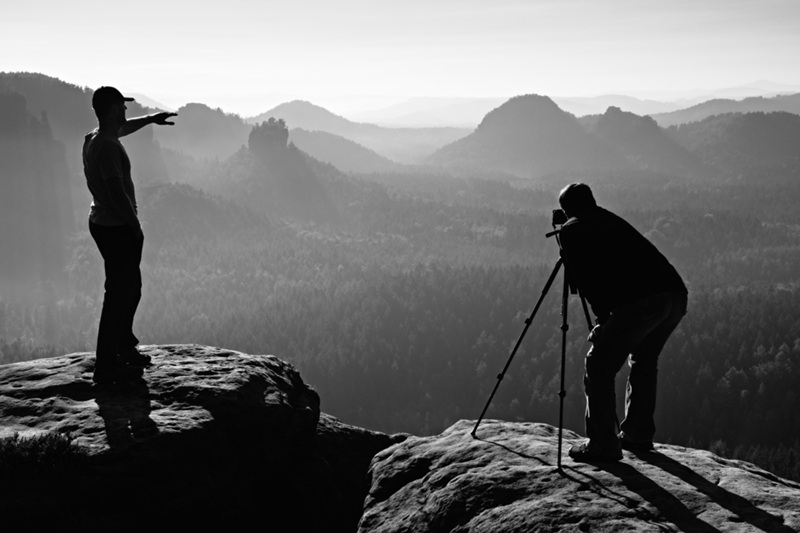
Every day, millions of colorful images are being shared on the internet, but traditional monochrome photography still makes a significant impact. Since monochrome takes the attention away from distractions, it allows the photographer to focus on light, emotion, and detail.
This guide will provide instructions for creating stunning monochrome photographs by using basic techniques, good lighting, and effective editing.
Here are some tips for black and white photography:
A picture without colors lets forms stand out. Removing hues highlights how surfaces look and feel. A moment captured this way often seems honest, older than time itself. Shapes speak louder when not distracted by shade.
Taking pictures in white lets you tell stories with your photos. A simple scene can look very dramatic when it is in black and white. That is why many photographers use this style for taking pictures of people, streets, and art.
Light is an important thing in black and white photography. Since there is no color, the light and shadow are what make your subject look interesting.
Later in the morning, shadows stretch thin across surfaces. A pale glow wraps around objects, softening edges naturally. When sunlight grows stronger, images gain sharpness along with intensity. Think about stepping outside midday to see highlights burn through dark areas. Early evening brings dimmer tones that wrap subjects gently again.
Bold and stark images are formed by bold, bright shadows against white or light-colored backgrounds; soft and subtle gradients between darker and lighter areas are perceived as being very mild forms of image content.
To capture contrast, look for moments when sunlight dances with shade - think mirrored surfaces or outlined shapes against bright skies. Sometimes it's the edges where things glow that matter most.
Color simply is a must for some subjects, while others actually work better without it.
Photographing people is a good idea when you want to make a white photograph, as it visualizes their emotions. Capturing street scenes and silent moments in real life also make good candidates for black and white. Additionally, landscapes with big clouds, strong shadows, or interesting, vivid textures will look almost stunning when rendered in black and white.
When you take pictures in black and white, you need to think more about how you compose the shot. This is because the color is not there to guide the viewer’s eye.
Use lines like roads or rivers to lead the viewer’s eye to the subject. Patterns and textures make your pictures more interesting. The rule of thirds can help you balance your composition and make your pictures look more visually appealing.
Even if you want to take pictures in black and white, it is better to take them in color.
This gives you control when you edit the pictures. You can adjust the contrast, brightness, and tones easily. Taking pictures in RAW format also helps you keep the quality of your pictures when you convert them to black and white.
Black and white editing is where your photos really come alive. It is not about removing the color from your photos.
You need to start by changing your photo to a white picture using the editing tools. Then you need to work on the contrast to make the photo stand out. You also need to balance the dark parts of the photo.
There are some techniques that can help you with white editing. Dodging and burning are two of these techniques. They help you control the light in areas of the photo and guide the viewer’s eye.
Photo tones are the different shades of gray in a photo. Controlling these tones is very important in white photography.
A good photo should have a mix of medium and light tones. If the photo is too dark, it can look dull. If it is too bright, it can lose some of the details. Playing around with the tones can help you create moods in your black and white photos.
Textures are more visible in white photos because there is no color to distract you.
Look for textures in things like walls, clothes, nature, or everyday objects. These details make your black and white photos more interesting and add depth. Texture is also important for creating contrast in your photos.
Patterns and shapes bring life to monochrome images. A steady beat shows up when forms echo one another across the frame. Balance appears quietly, built by repetition. Rhythm grows where shapes align without color to distract.
Start with lines, then add curves - shapes fill out the structure. A sudden subject cutting through a repeating design brings surprise into view.
People who are just starting out with black and white photography make some mistakes. One common mistake is changing every photo to black and white without thinking about whether it is an idea.
If you do not pay attention to the contrast, your photos can look flat. If you edit your photos much, you can ruin the natural look of the tones. You should always keep your edits simple and balanced.
The best way to get better at white photography is to practice. Try taking photos in different lighting conditions and locations.
Try taking white photos of people, landscapes, and city scenes. Each type of photo can help you understand light, composition, and contrast better.
Some people like their photos to have contrast, while others like them to be softer.
The way you edit your photos, the tones you use, and the subjects you choose will all be part of your style. Keep trying things to improve your skills.
Black and white photography is not just about the technique. It is also about telling a story.
Without color, the emotions in a photo can be stronger. A simple moment can become a photo if you take it at the right time. Use light, contrast, and composition to tell stories with your photos.
Photography in black and white has been around for ages and allows people to concentrate on the most important aspects of an image/photograph. By working with light sources, refining your photography for contrast, and becoming proficient at black & white editing, you can produce beautiful and thoughtful images.
As you work with tones in photography and continue to photograph different scenes, you are able to take very basic scenes and convert them to works of art out of grayscale images.
You should opt for black and white photography if the scene contains dramatic light, shadows, or textures. Black and white is a great choice when colors are either distracting or simply not needed. It helps you concentrate on composition, feelings, and the key elements of a photo.
If you want to quickly get better at monochrome photography, doing it regularly is the best way to become familiar with the various qualities of light. Monochrome photography comprises contrast photography, composition, and surface quality. One should also be familiar with black and white editing and photo toning to get a grip on how those two affect a greyscale image.
It is recommended that you use a careful contrast, photography, brightness, and photo tone adjustment combo for your grayscale images, as it is the best method. You may also use black and white editing techniques, such as dodging and burning, to enhance the details and guide the viewer's eye, but you should be cautious about over-editing the image.
There is no reason why you cannot get black and white photos with your smartphone camera. Newest smartphones have such good cameras that one can take images in black and white straight from the camera. Focus primarily on lighting, composition, and contrast photography so that the resulting images are of the highest quality and can be refined or improved with editing apps. The final product will thus be professional-looking and better in quality.
This content was created by AI